

Expert Oral Surgery Services in Las Vegas, Henderson & Summerlin
Comprehensive Care
Doesn’t Stop at Surgery
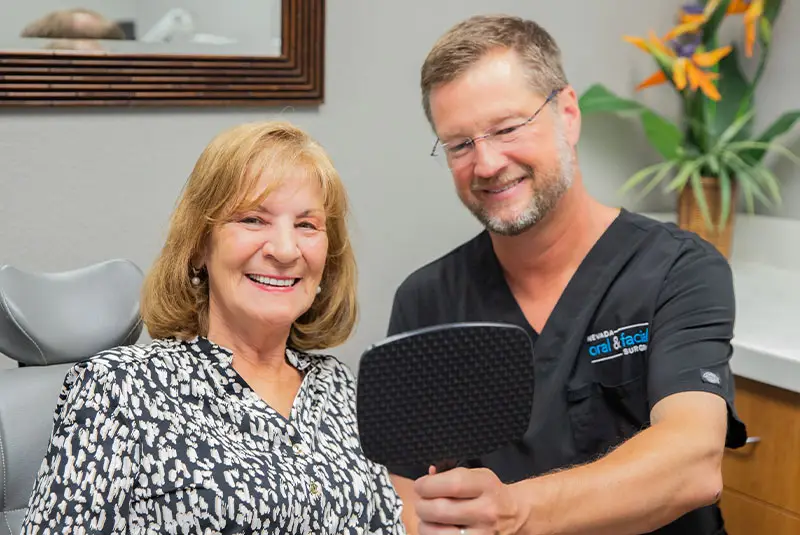
"I Got My Life Back, Quality and Happiness!"
Official Oral and Facial Surgeons for The Vegas Golden Knights
We’re proud to be the Team Oral and Facial Surgeons for the Vegas Golden Knights.
Reclaim Your Confidence and Health
Oral health issues sometimes require advanced care, and oral surgery can be daunting. At Nevada Oral & Facial Surgery, we’re proud to provide comprehensive care, including oral surgery, all within the comfort of a familiar practice you already know and trust. With the support of a reliable team of oral surgeons and proven dental techniques, we ensure your comfort throughout every procedure.
Issues such as failing teeth, unsalvageable teeth, or problematic wisdom teeth demand attention to prevent potential health hazards. We’re here to assist if you’re searching for a trusted oral surgeon in the Nevada area, but feel overwhelmed by the task. Whether you require dental implants to replace missing teeth, restore healthy bone volume, or solutions for severely decayed or damaged teeth, our team is dedicated to your oral health and well-being.
What Is Oral Surgery?

Fully-Guided Surgical Techniques
for Optimal Procedures
We understand that the prospect of needing oral surgery can be stressful. That’s why our practice is dedicated to providing affordable and comfortable solutions for wisdom tooth extractions, dental implants, and everything in between, ensuring you can confidently approach surgery. Our team is highly trained, experienced, and equipped with the latest surgical technology to address various advanced treatment needs. We take pride in offering efficient and effective surgical techniques to expedite your healing process and enable you to regain your quality of life.
Our advanced technology, featuring CBCT scans, digital X-rays, and intraoral cameras, allows us to create precise digital models of your anatomy, leaving no room for guesswork and ensuring precision care. Our commitment to fully guided surgical methods ensures error-free procedures and the most conservative approach to wisdom tooth extractions, bone grafting, dental implants, unsalvageable tooth extractions, and socket preservation with platelet-rich plasma. At Nevada Oral & Facial Surgery, your oral health and well-being are our top priorities.
Complete Oral Surgical Solutions
 1
1Wisdom Teeth Extractions
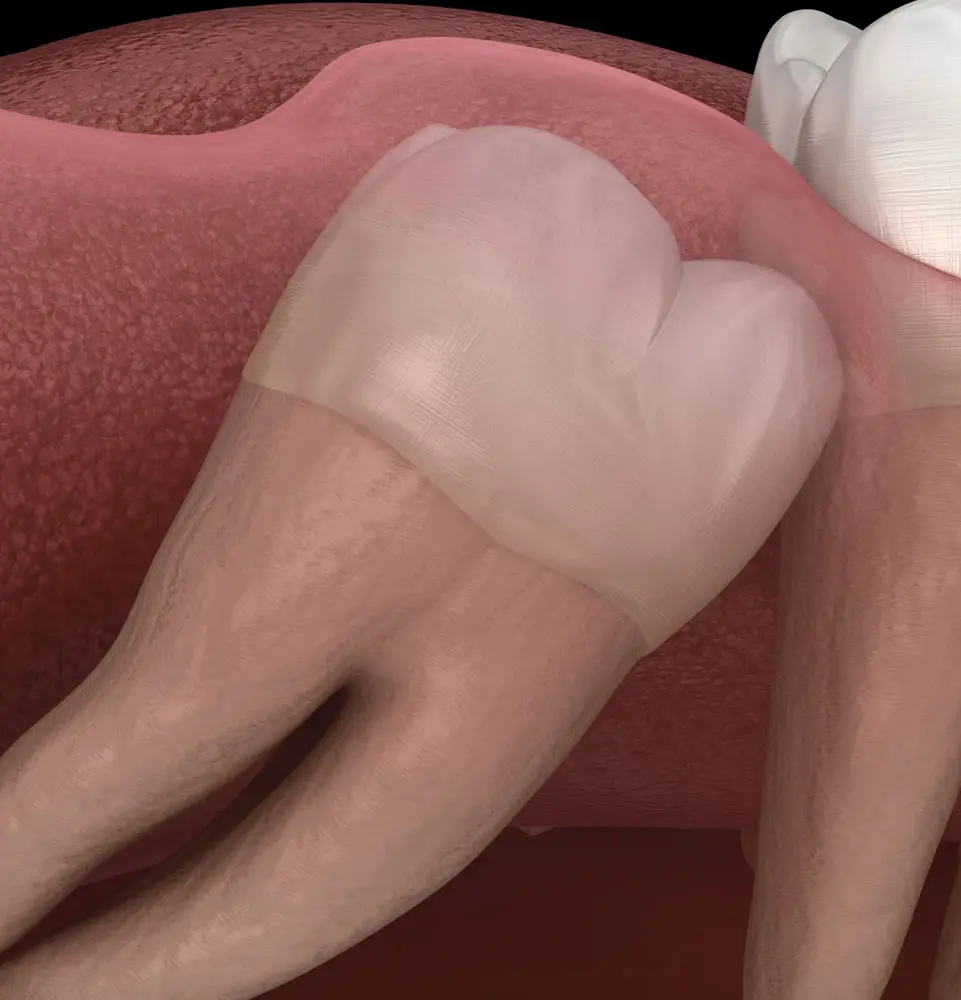
Wisdom teeth often spell trouble. Due to limited space, these teeth can pressure neighboring teeth, causing shifting and crowding issues. In more severe cases, they can become impacted within the jawbone, posing a risk to the health of adjacent teeth and bone structure and even leading to infections.
The typical age for a wisdom tooth extraction falls between 16 and the early 20s. For many, wisdom tooth extractions mark their first encounter with surgical procedures. We recognize the significance of ensuring a smooth and comfortable experience during this process.
- 2
Tooth Extractions
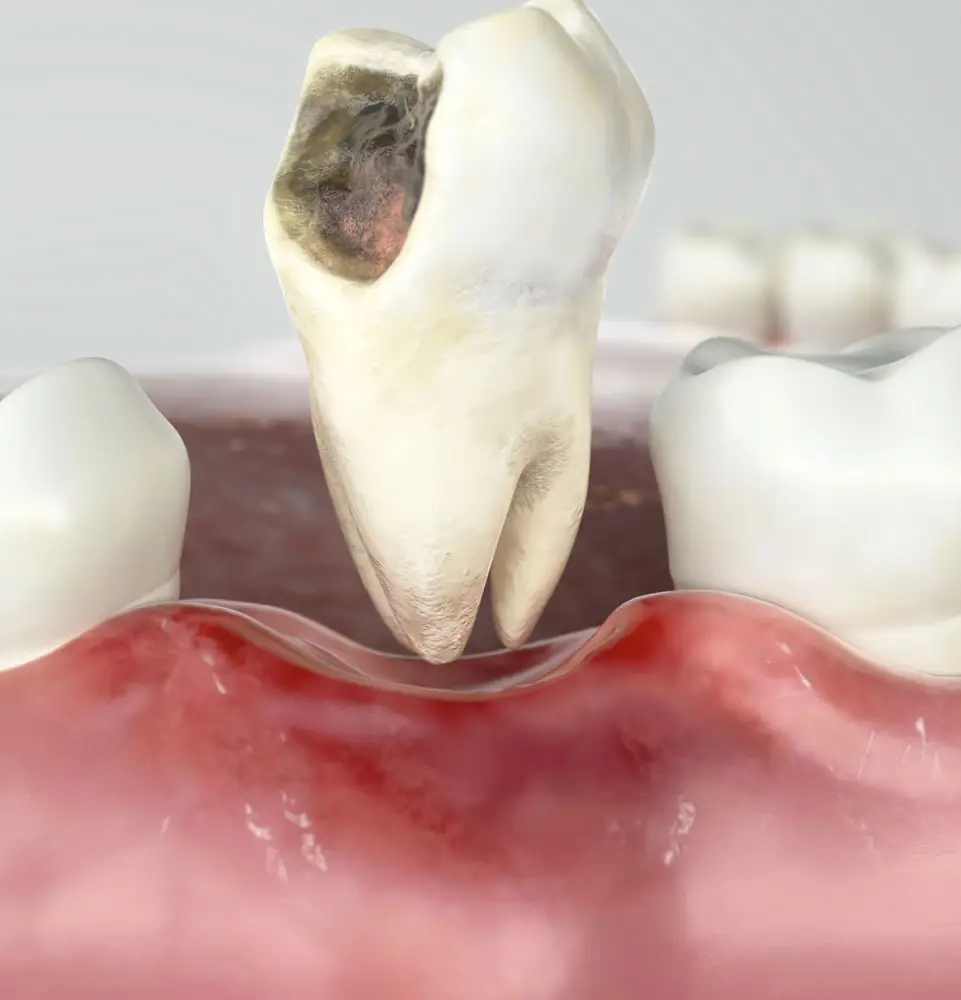
We aim to keep your teeth as strong, stable, and healthy as possible. However, there are situations where teeth may become unsalvageable. In some cases, cavities may become too deep to be treated. In others, teeth may fracture or break below the gums or into the root.
Repeated dental treatment can leave a tooth without enough healthy structure to accommodate further restorations. Regardless of the situation, we can help you with safe, comfortable, and efficient tooth extractions to get you out of pain and start you on the path to restored dental health.
- 3
Bone Grafting
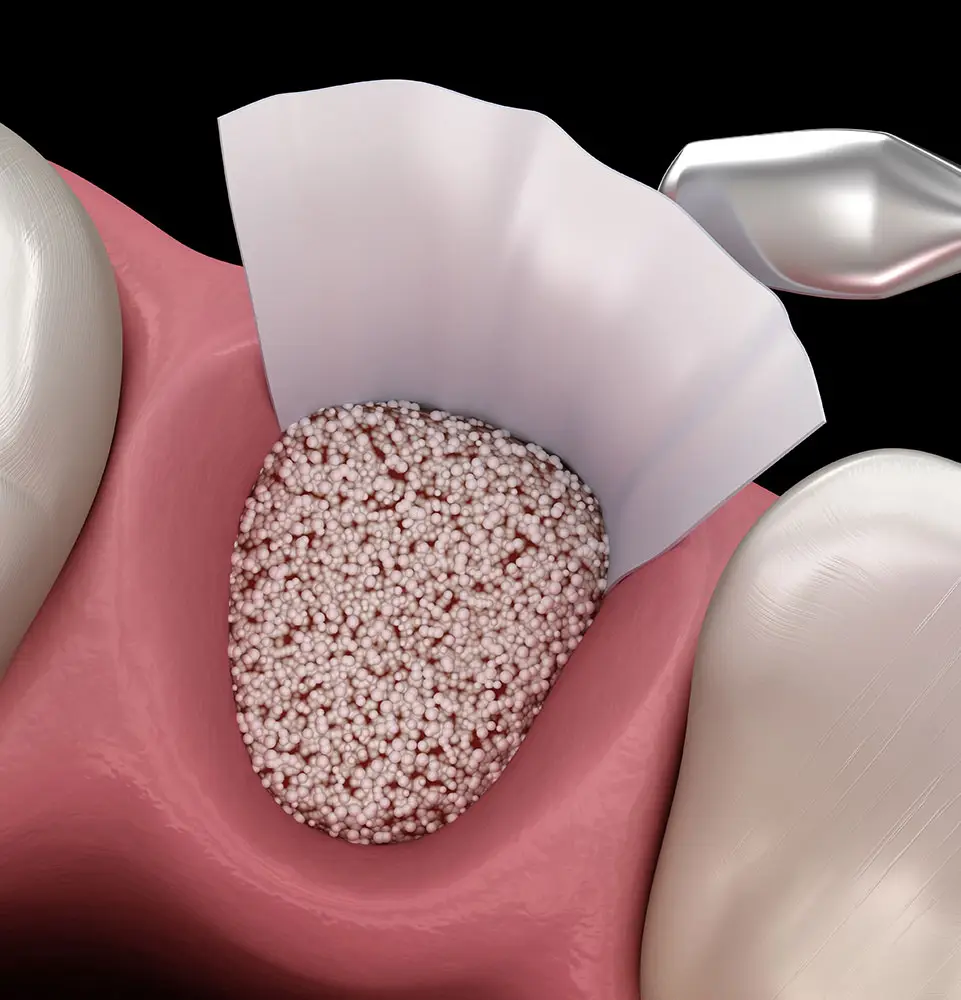
When a tooth is lost, the body no longer has a reason to maintain the bone structure that once supported it. This gradual bone loss can trigger a cascade of problems, including adverse effects on neighboring teeth, alterations to facial appearance, weakened jawbone integrity, and potential strain on the jaw joints.
Restoring the lost bone in most cases may be necessary to lay the foundation for reconstructing your smile. Bone grafting provides a solution by enabling us to augment the hard tissue within a tooth socket or reshape the bony ridge, ensuring a solid foundation for further dental work.
- 4
Platelet-Rich Plasma
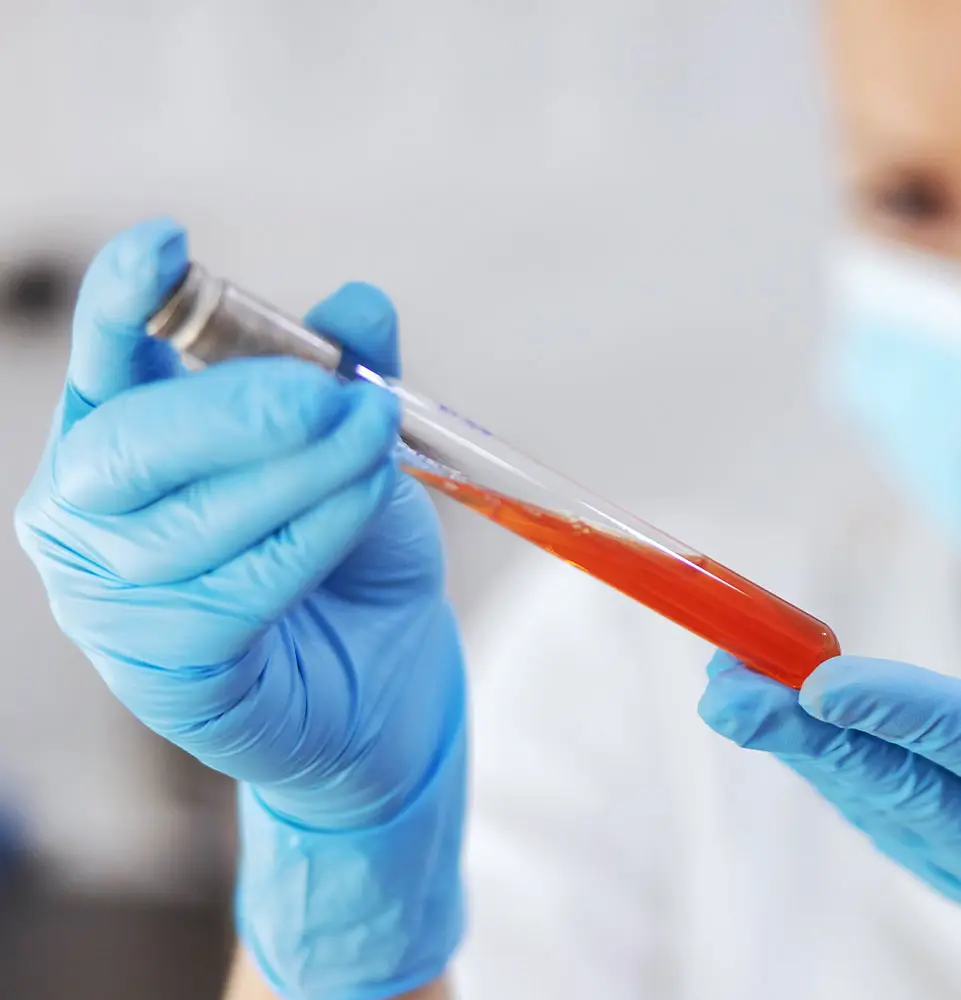
We frequently recommend platelet-rich plasma following tooth extractions or cyst removals to repair defects, prevent dry sockets, and stabilize the bone tissue. As a supplement to traditional bone grafting, platelet-rich plasma improves outcomes and ensures you’ll get the best final result from your treatments, including dental implants.
The process starts by taking a small blood sample. We isolate specific compounds from your blood, enhancing healing and promoting new bone tissue growth. Bone grafts with platelet-rich plasma heal faster, more comfortably, and with superior density.
- 5
Dental Implant Surgery
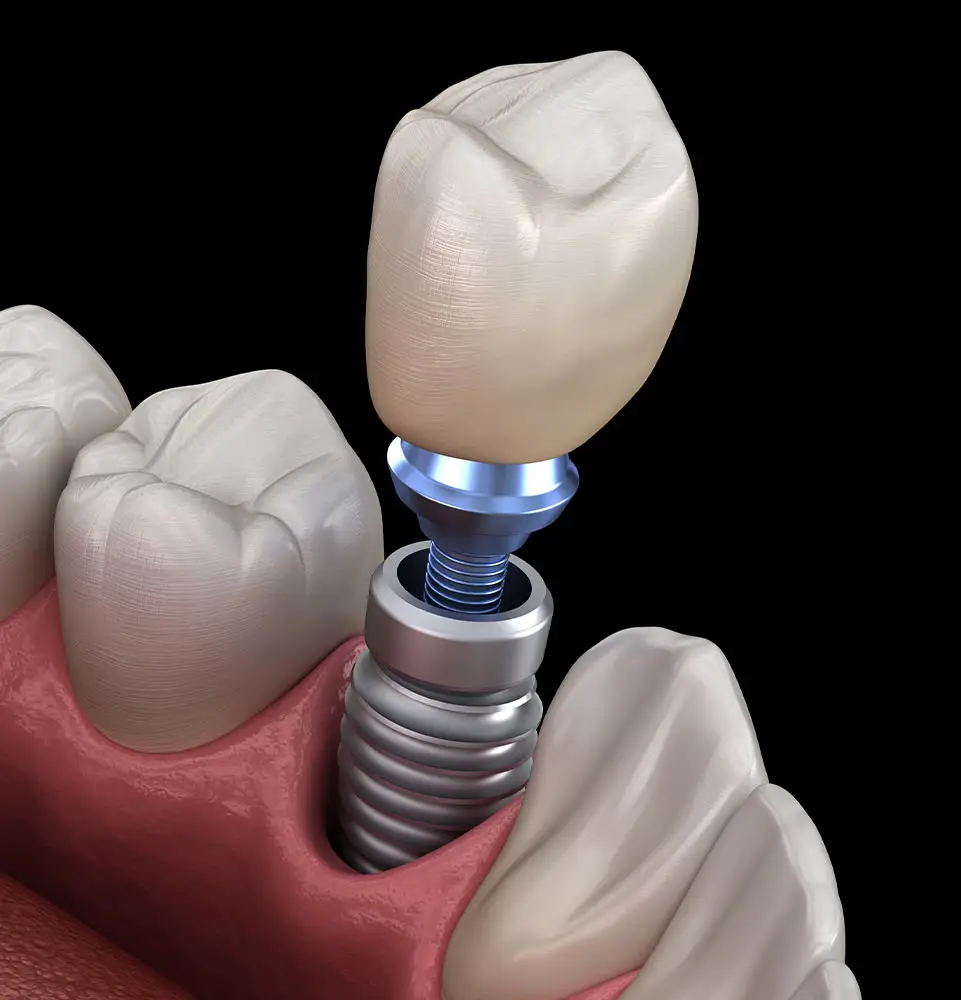
Dental implants are the highest recommended solution for tooth loss, whether you’re missing one, several, or all the teeth. With a post set directly into the bone tissue, dental implants mimic the structure and appearance of natural teeth.
Dental implants can withstand 99% of normal biting forces, meaning you can eat a full diet without worrying about your prosthesis. You won’t have to rely on the surrounding teeth as with a dental bridge or worry about leaving your teeth in a glass!
- 6
Gum Surgery
Gum surgery treats gum disease, repairs damaged gum tissue, and restores gum lines. It can also improve oral health, reduce symptoms like bleeding and swelling, and enhance the appearance of your smile. The procedure involves cutting or reshaping gum tissue, and sometimes the underlying bone, and is typically performed under anesthetic.
Gum surgery includes flap surgery to remove bacteria, tissue grafting to replace damaged or missing gum tissue, bone grafting to rebuild damaged areas, and crown lengthening to address overgrown gums. These procedures treat gum-related issues and contribute to better oral health and an improved smile.